Zillah
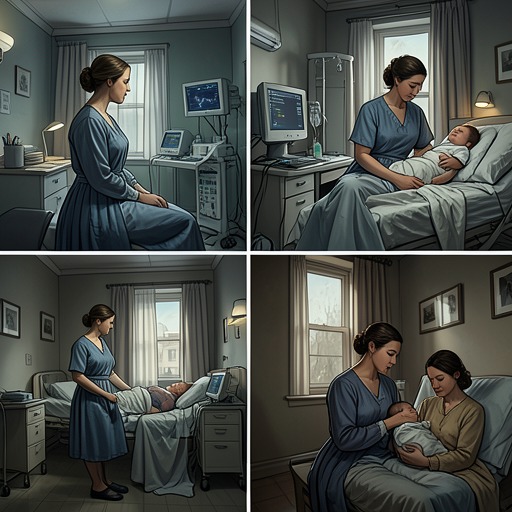
Mothering SundayZillah is Lady Lavinia Huntley’s personal maid and former nanny, a trusted companion whose loyalty is expressed through practical care and years of dangerous silence. When Lavinia’s husband demands an heir and their newborn daughter is threatened with concealment, Zillah secretly saves the infant and leaves her at the workhouse steps. That child grows up as Sunday Small. Zillah’s eventual confession reunites mother and daughter, turning a private act of protection into the revelation that reshapes Lavinia’s family.
Identity and Devotion
Zillah has served Lavinia in more than one capacity: she was first her nanny and later became her personal maid. Their closeness is familial in feeling, and Zillah thinks of Lavinia as a daughter. Verity Lockett, Zillah’s niece, is also close to Lavinia; when Lavinia asks after her maid, she calls her Aunt Zillah, a form of address that reflects the intimacy of their household ties.
Zillah’s affection is not merely sentimental. She watches for the effects of Lavinia’s husband’s treatment, comforts her after upsetting encounters, and understands how deeply Lavinia longs for a child. She also recognizes the danger in opposing a man with influence over the family doctor. Her care therefore takes the form of both tenderness and careful judgment: she seeks ways to help Lavinia without exposing either of them to retaliation.
The Secret of Sunday’s Birth
The decisive test of Zillah’s loyalty comes when Lavinia gives birth to a girl. The baby is healthy and resembles her mother, but the family’s expectation of a male heir makes the child’s sex a source of danger. Lavinia’s husband arrives demanding to know the outcome. Zillah understands that the infant’s safety cannot be taken for granted, particularly after he has threatened that Lavinia could be declared insane and confined to Hatter’s Hall, while Zillah herself could be sent to the workhouse.
Zillah carries the baby away from the house and meets Matthews, the master’s valet, beside a grave he has dug. Two earlier daughters, born a year apart, truly died at birth and lie in the orchard. This infant is alive. Rather than let Matthews know that, Zillah uses a pillow wrapped in a shawl to make him believe he is burying the child. She hides the real baby in her own room, then waits until the household is quiet before carrying her to the workhouse and leaving her on its steps. She stays nearby until someone comes, making sure the child has been found and is safe.
The workhouse is not a place Zillah mistakes for a home, but it offers a way to get the baby out of immediate danger and into care. She does not tell Verity the child’s identity, even though Verity has recently begun working there. Instead, Zillah relies on her niece as a discreet source of news about the infant’s welfare. The arrangement preserves the secret while allowing Zillah to learn how the child fares. The baby becomes Sunday Small, whose survival depends on this concealed intervention.
Protecting Lavinia and Finding a Way Forward
Zillah’s silence is imposed by the threat surrounding it, not by indifference to Lavinia. She believes her husband capable of carrying out his threats: the family doctor is his friend, and Lavinia could be declared insane and sent away. Zillah also understands that exposure would put her own safety at risk. She carries the knowledge for years, even as she watches Lavinia grieve for the child she believes was stillborn. The secret protects Sunday’s life, but it also leaves Zillah bearing the burden of knowing that Lavinia has been denied the truth.
Her assistance later extends beyond the household. Zillah encourages Lavinia to join the Board of Guardians after Lavinia has withdrawn from public life following the loss of a child. Lavinia acknowledges that Zillah prompted her to take this step and says she is glad she did. The change gives Lavinia a way to engage with the workhouse and its treatment of those in its care, rather than remaining secluded in grief.
When Lavinia becomes concerned about what Sunday has suffered in the workhouse, Zillah proposes a practical route to protect her. She has heard that the household’s laundry maid will soon leave to marry and suggests offering Sunday the vacancy. The post is low in status, but it would place her in safer circumstances than an asylum, which Zillah fears could worsen the condition of someone confined there. She also urges caution: Lavinia should not make accusations against the housemaster until Sunday is secure and there is evidence. Zillah’s plan shows her characteristic combination of compassion and strategic restraint; first create a safe alternative, then consider what can be proved.
Care Through Illness and Loss
Zillah remains Lavinia’s closest support through later pregnancies and illness. When she sees Lavinia upset after her husband has been in her room, she goes to her and asks whether he has distressed her again. When Lavinia experiences what might be more than a stomach upset, Zillah voices her concern. During another pregnancy she sees signs that it is progressing well and hopes it will end happily; at that time, the couple’s husband is rarely at home and does not trouble Lavinia when he is there.
That hope is broken when Lavinia’s husband, drunk, handles her with a violence Zillah has not previously seen from him. Zillah helps undress Lavinia and tends to her while the household moves quietly around them. She fears for both mother and child and blames the incident on his drinking. When the baby is born prematurely and appears lifeless, the doctor tells Zillah to hold him while he treats Lavinia’s bleeding. The child survives: later, Zillah reassures Lavinia that Stephen Huntley is in the nursery with Molly Worthington, who has been feeding him while his mother is ill.
Zillah’s care also continues when Stephen dies. She quietly leaves the room to ask George to fetch the doctor and undertaker, intending to let Lavinia say goodbye before washing and preparing the child. The repeated presence of birth, threatened loss, and bereavement makes her service more than household duty: she is the person who attends to Lavinia through the moments when hope and grief are most difficult to separate.
Confession and Significance
After her husband is gone, Zillah considers whether she can finally reveal the secret she has carried for years. She must decide how to tell Lavinia and fears that her mistress may not forgive her. She explains that she hid the living baby, substituted the shawl-wrapped pillow at the grave, and carried the child to the workhouse steps. She also tells Lavinia why she had not confided in Verity: she wanted to learn how the child was doing without revealing her identity.
Lavinia immediately tells Zillah that she is not the one who needs forgiveness. She recognizes that Zillah saved her daughter’s life under difficult circumstances and assigns responsibility to the husband whose threats made the deception necessary. With Verity and Zillah holding her hands, Lavinia resolves to find Sunday and tell her who she is. The confession changes Zillah’s long silence into the means by which mother and daughter can meet as adults.
Zillah’s role links private loyalty to the novel’s wider concern with vulnerable people exposed to institutional and domestic power. She cannot safely challenge her employer openly when the baby is born, so she protects the child through concealment; years later, she helps make a safer placement possible for Sunday and supports Lavinia’s involvement in workhouse reform. Her choices carry a moral cost, especially the years in which Lavinia mourns a daughter who is alive. Yet the narrative presents that silence as a response to coercion and danger, and her eventual disclosure as an act of trust that permits recognition, forgiveness, and reunion.